2026
SoBR: Scaling Annotation-Free Code Retriever Training Beyond the Memory Wall
Chenghao Zhang, et al.
AAAI Conference on Artificial Intelligence (AAAI), under review 2027 (first author)
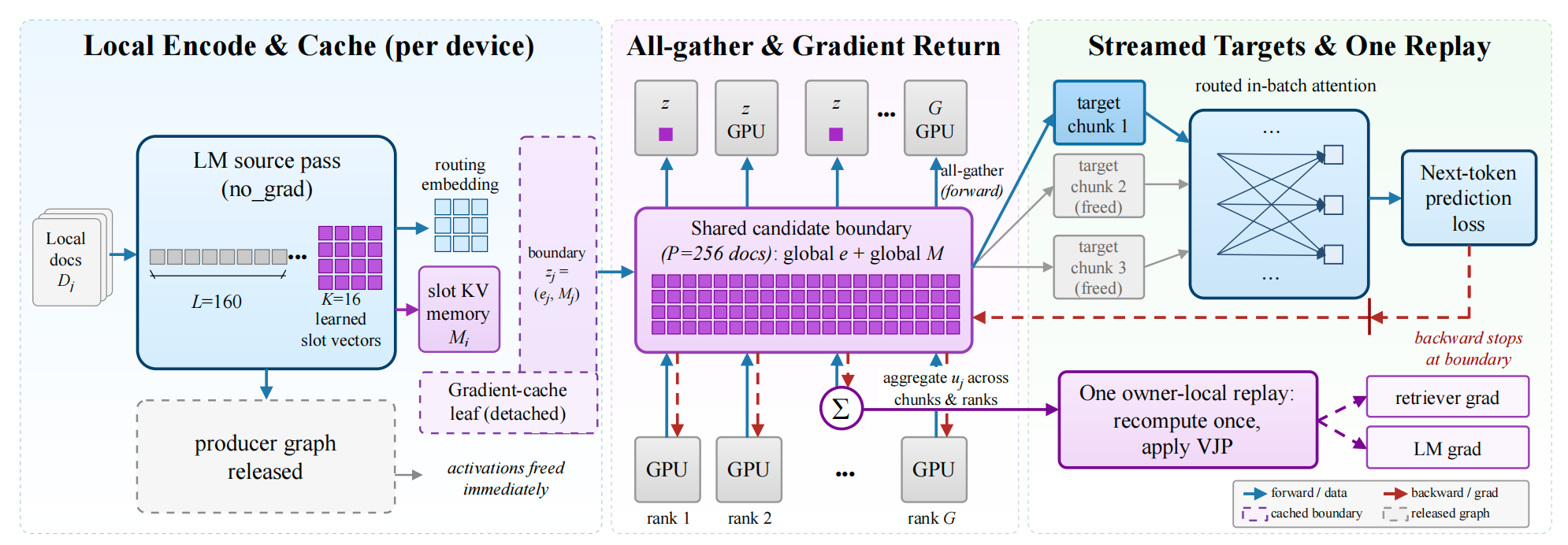
Introduces Source Slots to compress candidate representations for annotation-free retriever training, together with a single replay after cross-device gradient aggregation to preserve full-batch gradient equivalence while releasing intermediate activations. The method scales training to an 8B retriever with a shared pool of 256 documents and reaches 4.5× the median training speed of activation checkpointing.
SoBR: Scaling Annotation-Free Code Retriever Training Beyond the Memory Wall
Chenghao Zhang, et al.
AAAI Conference on Artificial Intelligence (AAAI), under review 2027 (first author)
Introduces Source Slots to compress candidate representations for annotation-free retriever training, together with a single replay after cross-device gradient aggregation to preserve full-batch gradient equivalence while releasing intermediate activations. The method scales training to an 8B retriever with a shared pool of 256 documents and reaches 4.5× the median training speed of activation checkpointing.
ClaimWeaver: Query-Conditioned Evidence Organization for Multi-Hop Retrieval-Augmented Generation
Chenghao Zhang, et al.
AAAI Conference on Artificial Intelligence (AAAI), under review 2027 (co-first author)
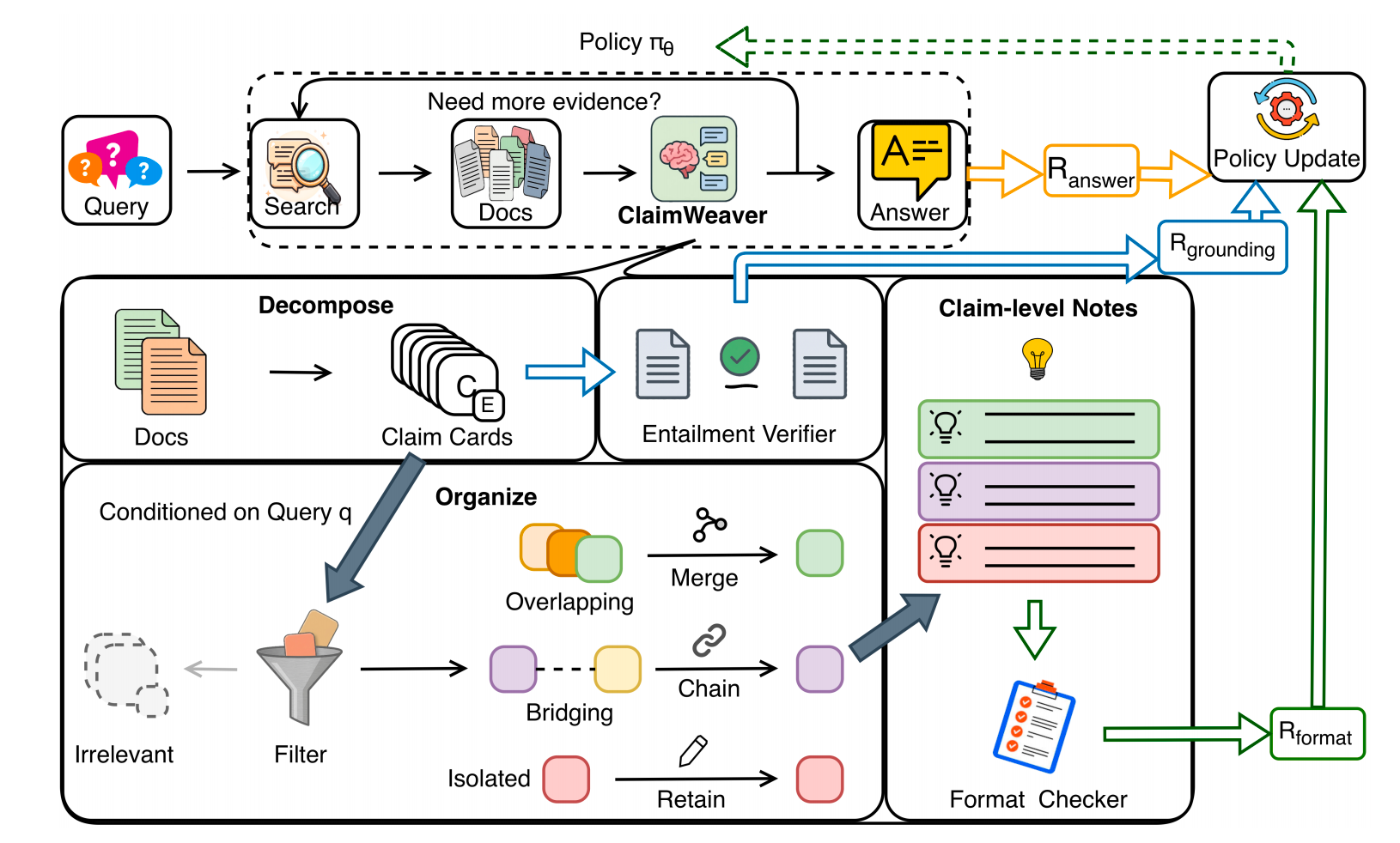
Introduces ClaimWeaver, a query-conditioned evidence organization framework that decomposes retrieved passages into source-grounded atomic claims, filters and consolidates evidence, and connects complementary claims through directed bridges for multi-hop reasoning.
ClaimWeaver: Query-Conditioned Evidence Organization for Multi-Hop Retrieval-Augmented Generation
Chenghao Zhang, et al.
AAAI Conference on Artificial Intelligence (AAAI), under review 2027 (co-first author)
Introduces ClaimWeaver, a query-conditioned evidence organization framework that decomposes retrieved passages into source-grounded atomic claims, filters and consolidates evidence, and connects complementary claims through directed bridges for multi-hop reasoning.
Disentangled Generation-Based Prototypical Alignment for Few-Shot Unsupervised Domain Adaptation in Graph-Level Anomaly Detection
Z. Ni, Chenghao Zhang, H. Wan, X. Zhao
AAAI Conference on Artificial Intelligence (AAAI) 2026
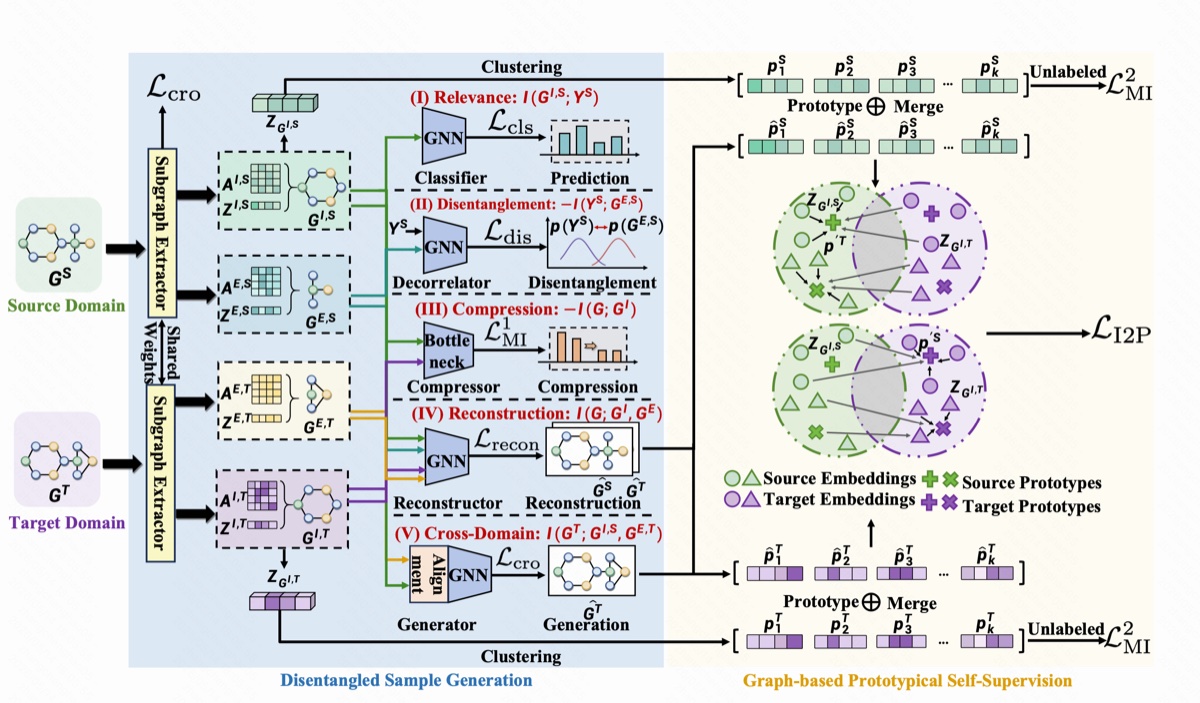
Introduces DGPA to mitigate performance degradation in cross-domain few-shot graph-level anomaly detection, improving average AUROC by 5.72pp over the strongest baseline.
Disentangled Generation-Based Prototypical Alignment for Few-Shot Unsupervised Domain Adaptation in Graph-Level Anomaly Detection
Z. Ni, Chenghao Zhang, H. Wan, X. Zhao
AAAI Conference on Artificial Intelligence (AAAI) 2026
Introduces DGPA to mitigate performance degradation in cross-domain few-shot graph-level anomaly detection, improving average AUROC by 5.72pp over the strongest baseline.
2025
Factor-wise Disentangled Contrastive Learning for Cross-domain Few-shot Molecular Property Prediction
Z. Ni, Chenghao Zhang, H. Wan, X. Zhao
Frontiers of Computer Science 2025
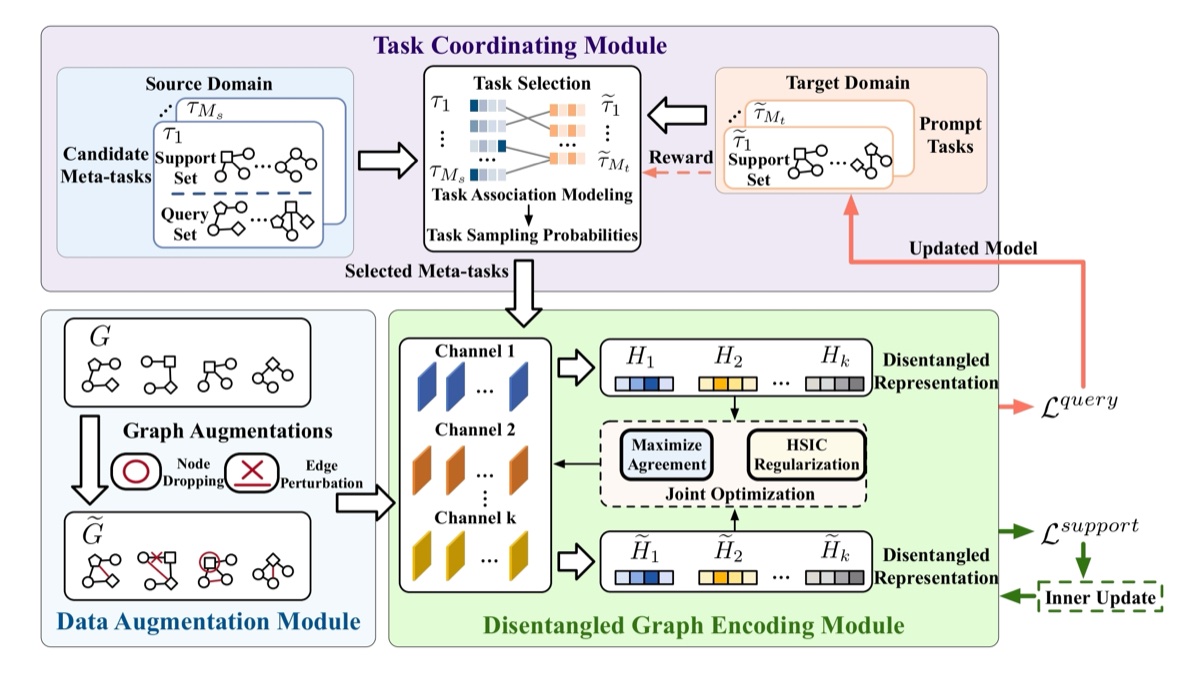
Studies factor-wise disentangled contrastive learning for cross-domain few-shot molecular property prediction and improves average ROC-AUC by 1.53pp.
Factor-wise Disentangled Contrastive Learning for Cross-domain Few-shot Molecular Property Prediction
Z. Ni, Chenghao Zhang, H. Wan, X. Zhao
Frontiers of Computer Science 2025
Studies factor-wise disentangled contrastive learning for cross-domain few-shot molecular property prediction and improves average ROC-AUC by 1.53pp.
2024
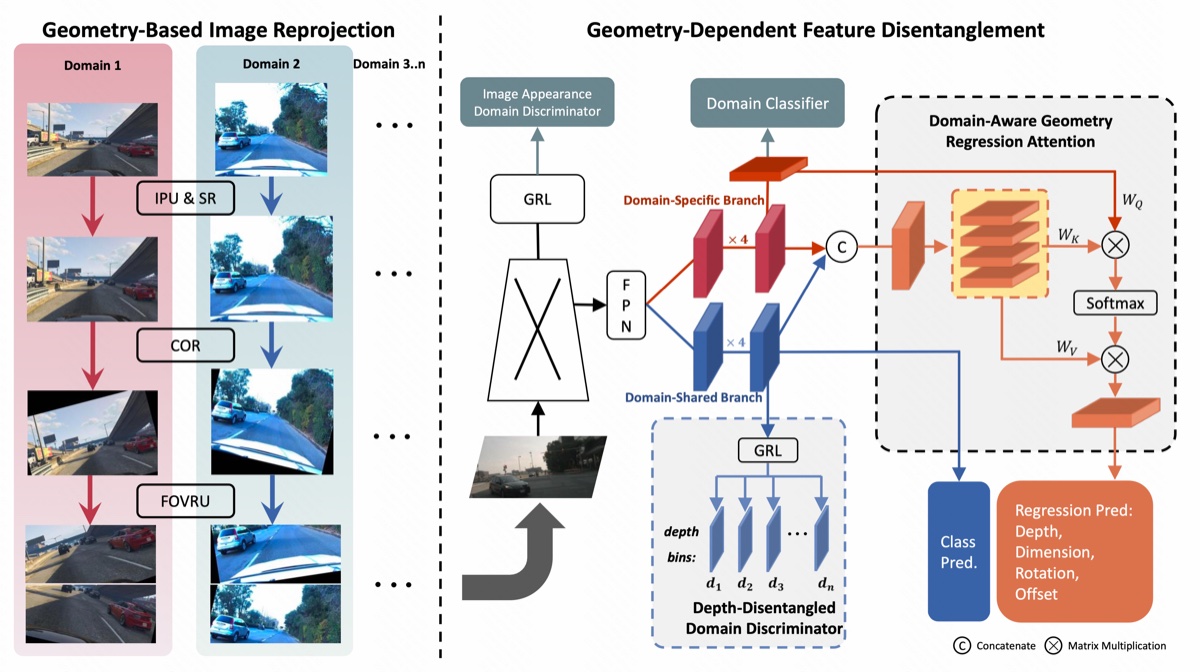
Geometry-Guided Domain Generalization for Monocular 3D Object Detection
F. Yang, H. Chen, Y. He, S. Zhao, Chenghao Zhang, K. Ni, G. Ding
AAAI Conference on Artificial Intelligence (AAAI) 2024
Uses geometry priors to improve cross-domain generalization for monocular 3D object detection. I contributed to implementing and integrating the attention module.
Geometry-Guided Domain Generalization for Monocular 3D Object Detection
F. Yang, H. Chen, Y. He, S. Zhao, Chenghao Zhang, K. Ni, G. Ding
AAAI Conference on Artificial Intelligence (AAAI) 2024
Uses geometry priors to improve cross-domain generalization for monocular 3D object detection. I contributed to implementing and integrating the attention module.